Home > Pregnancy > Third Trimester
Top OB/GYN: “Swollen Ankles in the Third Trimester Aren’t Something You Simply Have to Put Up With”
After 32 years caring for pregnant women, OB/GYN Dr. Harold Whitaker explains why pregnancy swelling often builds from morning to night — and why the most useful time to support your legs may be before they feel swollen at all.
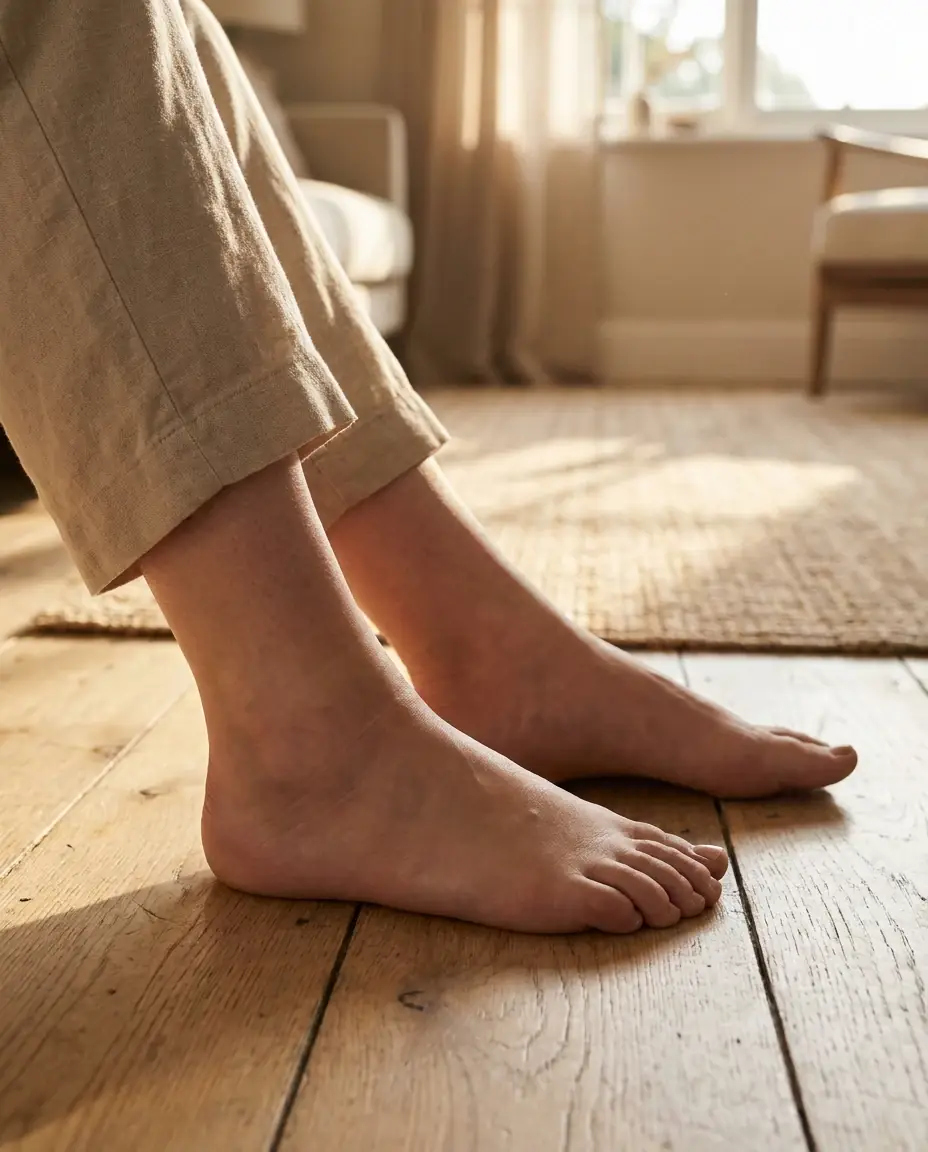

There is one sentence I have heard from pregnant women more times than I can count:
“My feet look normal when I wake up. By late afternoon, they don’t even look like mine.”
I’m Dr. Harold Whitaker, an OB/GYN with 32 years of clinical experience.
For most of my career, I have cared for women through pregnancy, and I have paid particular attention to the mechanics of circulation in the legs: how blood moves through the legs, what happens when that return journey becomes slower, and why gravity becomes far more noticeable when the body is already under extra physiological load.
Pregnancy is one of the clearest examples of that.
THEN IT BECAME PERSONAL
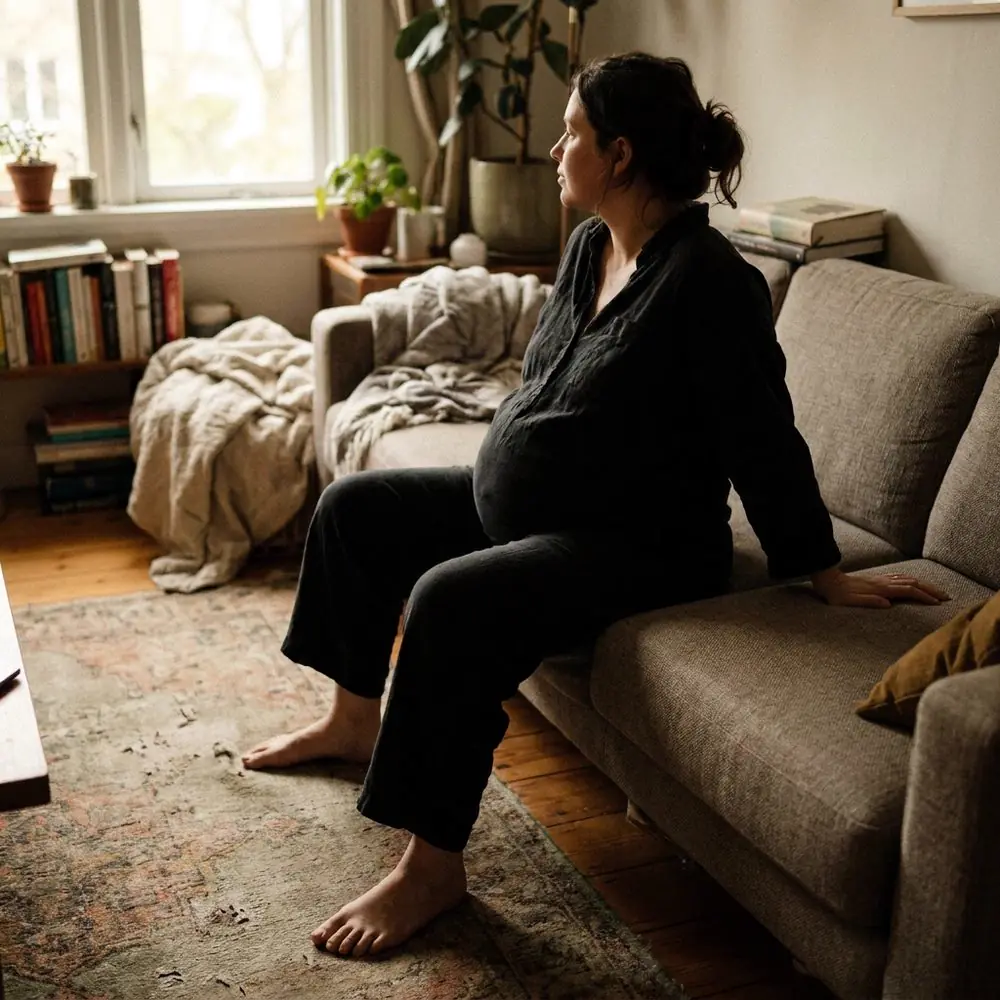
For years, I had listened to patients describe swollen ankles, heavy legs and shoes that became tighter as the day went on.
Then I watched the same pattern happen to my own wife, Susan.
She first began noticing it toward the end of her second trimester. At first it was subtle enough to dismiss. By the time she moved into her third trimester, it had become part of the rhythm of almost every day.
She would wake up in the morning and her feet looked fairly normal. Her shoes went on without a problem. She could move around the house and start the day without thinking much about her ankles.
Then, hour by hour, things changed.
After time on her feet, sitting, driving, doing errands or simply getting through a normal day, her lower legs started to feel heavier. The elastic from ordinary socks left deeper marks around her ankles. Shoes that had felt comfortable at breakfast could feel noticeably tighter by late afternoon.
Some evenings, the first thing she wanted to do was take her shoes off, sit down and put her feet up.
There was no single dramatic moment. That was exactly what struck me.
The swelling was building quietly for hours.
As an OB/GYN, I understood the physiology. But seeing Susan deal with it day after day changed the way I thought about the problem.
We tried the sensible things first: more movement when she felt up to it, regular breaks, comfortable shoes, staying hydrated, avoiding long periods standing still and elevating her feet in the evening.
Those things could help her feel better temporarily.
But by then we were usually reacting after the heaviness and puffiness had already appeared.
That was the point when the question changed for me.
Instead of asking, “What can we do once her ankles are swollen?” I started asking, “What can support her legs during the hours when that swelling is developing?”
That distinction sounds small.
It ended up changing the entire way I approached everyday pregnancy swelling.
THE PATTERN I KEPT SEEING AGAIN AND AGAIN
The pattern is surprisingly consistent.
In the morning, the legs have had hours without the same gravitational load they experience during the day. You stand up, start moving, and for a while everything feels normal.
Then gravity starts doing what gravity always does.
Hour after hour, fluid has more opportunity to collect in the lowest part of the body.
For someone who is not pregnant, normal movement and healthy venous return usually manage that challenge well.
Pregnancy changes the equation.
By the third trimester, your body is carrying more circulating blood volume. Your uterus is much larger. Hormonal changes affect the tone of the veins. And the veins returning blood from the lower body are working in a very different mechanical environment than they were before pregnancy.
None of that means your body is failing.
It means your body is doing an enormous amount of extra work.
What I began paying more attention to was not just the swelling itself, but when it appeared.
For many women, it was minimal in the morning and progressively more noticeable by afternoon and evening.
That timing matters.
WE HAD ALREADY GIVEN WOMEN THE USUAL ADVICE
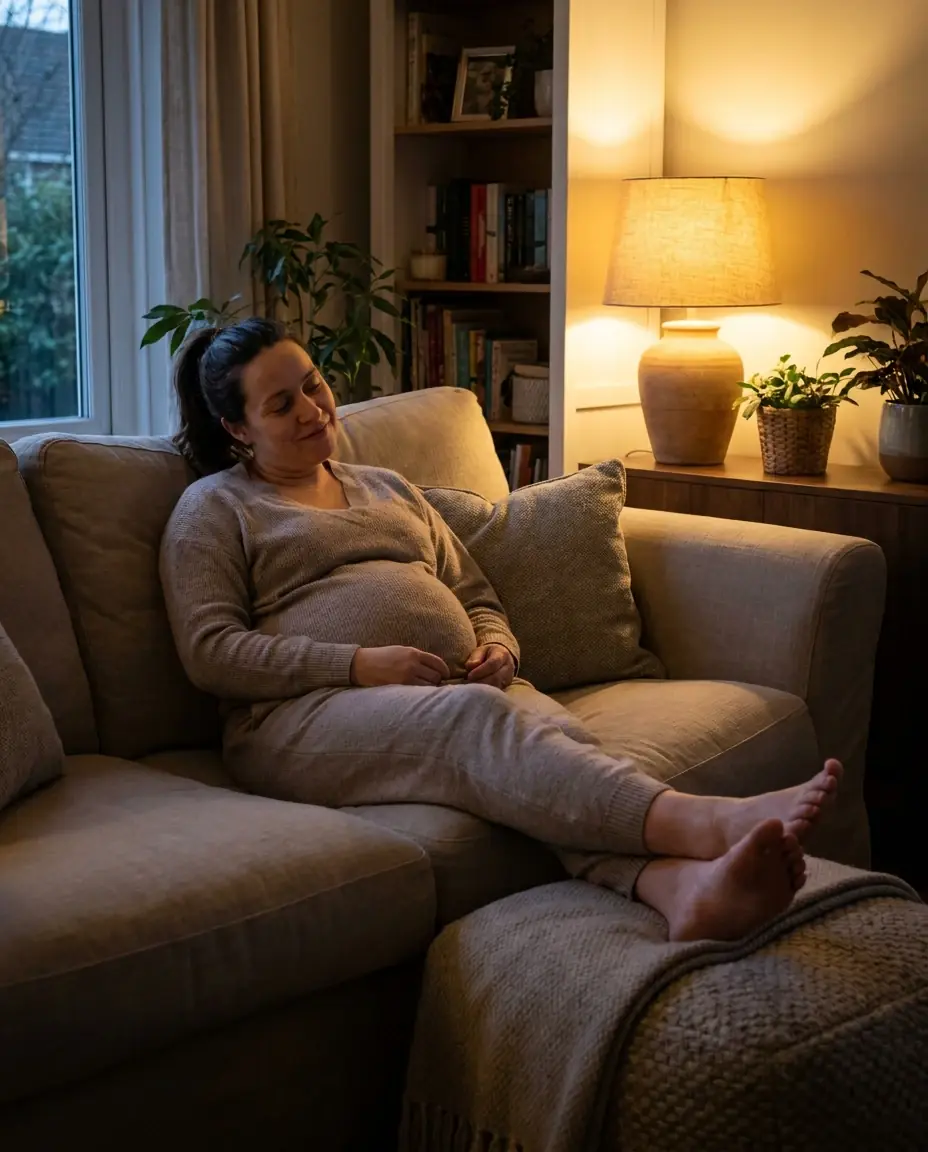
Most pregnant women already know the standard suggestions.
- Drink enough water.
- Move regularly when you can.
- Avoid standing in one place for very long periods.
- Put your feet up when you rest.
- Wear comfortable shoes.
Those are sensible habits. I still recommend sensible movement and rest.
But there is an obvious limitation.
Most of those strategies are intermittent.
You elevate your feet for twenty minutes. Then you stand back up.
You walk for ten minutes. Then you sit at a desk for an hour.
You change shoes. But changing shoes does not change what is happening inside the veins of the lower leg.
What many women wanted was not another thing to remember every hour.
They wanted something that could quietly support their legs throughout the part of the day when the swelling was gradually accumulating.
That is what sent me back to first principles.
THE DISCOVERY THAT CHANGED HOW I LOOKED AT THIRD-TRIMESTER SWELLING
When people think about circulation, they usually think about the heart.
But the lower legs have their own mechanical helper.
Every time you walk, the muscles of the calf contract. Those contractions help encourage blood in the veins of the legs to move upward.
I often describe the calf as a secondary pump.
It is not a second heart, of course. But movement matters because each step changes the pressure around the veins.
Now add pregnancy.
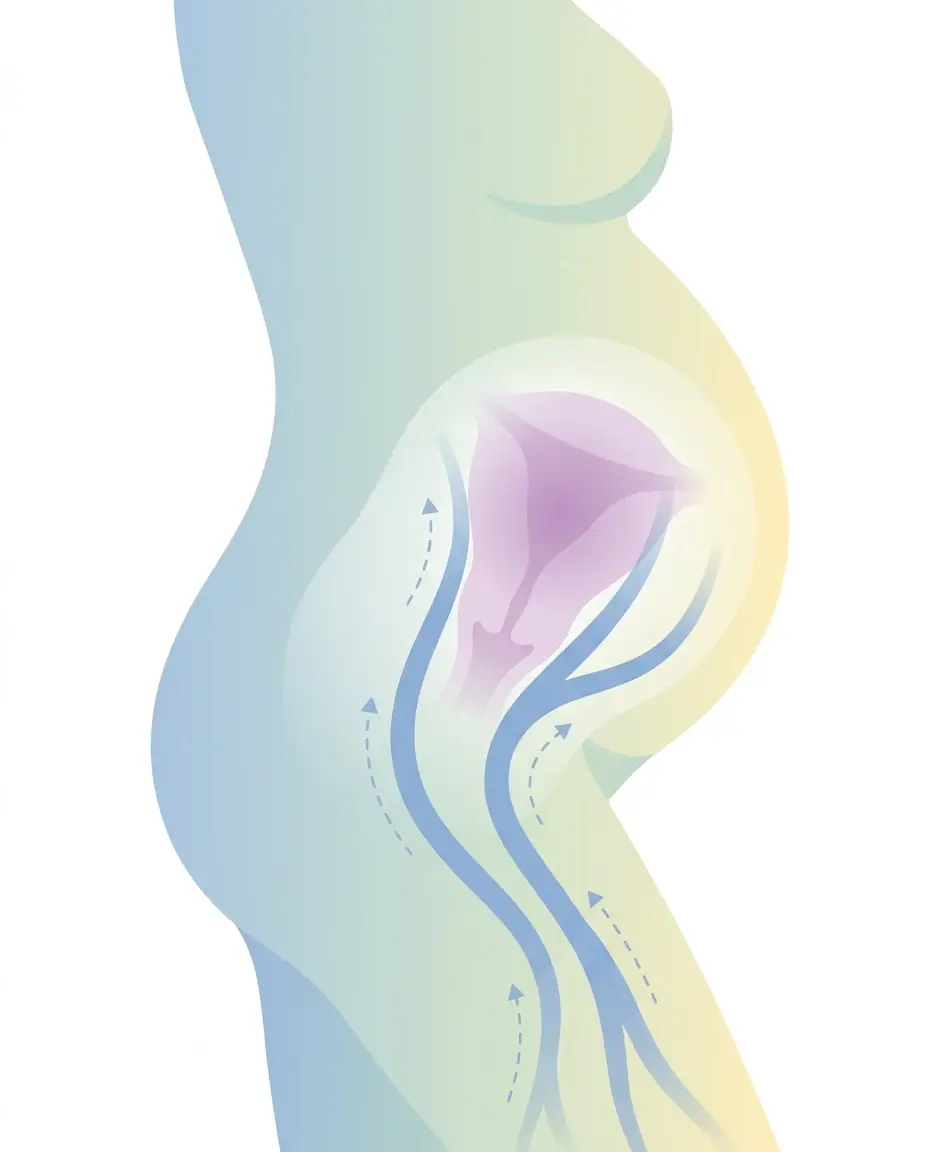
Your blood volume rises during pregnancy. Your uterus grows. Pressure within the abdomen changes. The return path from the legs can become less efficient, particularly later in pregnancy.
At the same time, many women are moving less simply because moving has become harder.
That combination is important:
Pregnancy increases the amount of blood and fluid your body is managing.
As the uterus grows, the veins carrying blood back from the lower body operate under greater mechanical pressure.
Gravity continues pulling fluid toward the feet and ankles whenever you are sitting or standing.
Fatigue, pelvic discomfort and the simple physical reality of late pregnancy can mean fewer steps and longer periods sitting.
Suddenly, the morning-to-evening pattern makes much more sense.
The swelling is not appearing out of nowhere at 5 p.m.
The conditions that encourage it may have been present for the entire day.
THE REAL ROOT CAUSE OF THAT “HEAVY, FULL” FEELING
Think of a typical third-trimester day in four stages.
You get out of bed and your ankles may look relatively normal. Your shoes fit. Your lower legs have not yet spent hours below your heart.
You have been sitting, standing, driving or moving around the house. Gravity has now been acting on the lower legs for several hours.
Sock marks become more obvious. Shoes feel tighter. The ankles can look rounded or puffy and the calves may feel heavy.
You finally put your feet up and try to undo what has accumulated through the day.
This is the timing problem I think many women miss.
The usual routine starts at Stage 4.
I became much more interested in Stage 1.
What if we supported the lower legs before gravity had eight or ten hours to work?
THE BREAKTHROUGH WAS ALREADY HIDING IN PLAIN SIGHT
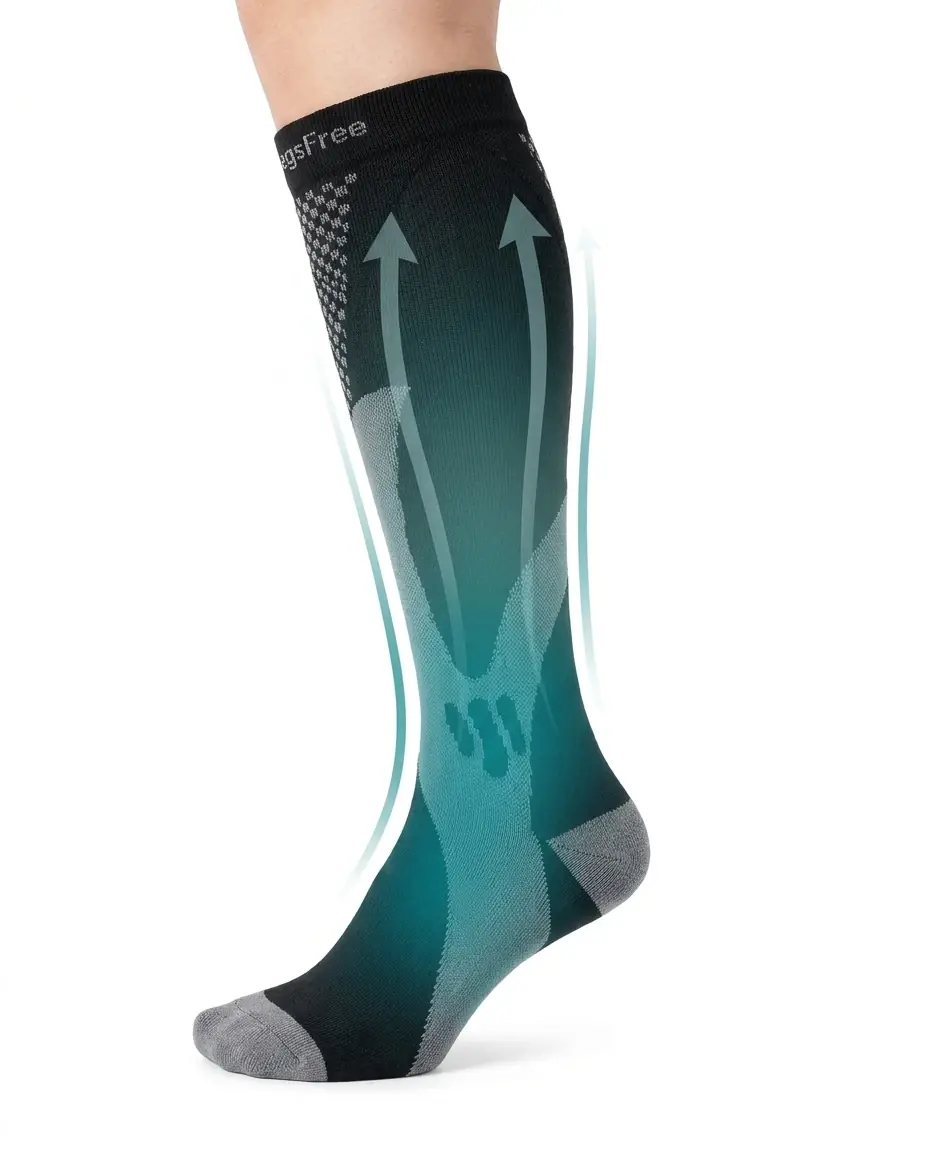
The principle I kept coming back to was graduated compression.
Graduated compression is not simply “a tight sock.”
The pressure is intentionally strongest around the ankle and gradually decreases higher up the calf.
That gradient is the point.
A random tight band around the top of the sock is not the same thing. An ordinary athletic sock that squeezes everywhere equally is not the same thing.
Properly designed graduated compression creates a controlled change in pressure from the ankle upward.
For me, the practical question was not whether the principle made sense.
It did.
The question was whether a pregnant woman would actually wear the socks for the number of hours required to make them useful.
Because a theoretically useful product becomes pointless if it is too hot, painfully tight, constantly rolling down or so difficult to put on that it stays in the drawer.
That became my checklist.
THE THREE THINGS I WANTED WORKING TOGETHER
I wanted three things happening at the same time.
Useful pressure at the ankle, where puffiness is often most visible first.
Pressure that gradually eases higher up the calf instead of squeezing equally from bottom to top.
A cuff and fabric combination comfortable enough to remain in place through a real pregnancy day without becoming another irritation.
That sounds simple.
But simple is exactly what I wanted.
I did not want a complicated recovery ritual.
I wanted something a woman could put on in the morning and largely forget about while she got on with her day.
WHY THE MORNING MATTERS MORE THAN MOST PEOPLE REALIZE
This is the part I would underline if you remember nothing else.
Compression is much easier to use before the legs are already puffy.
That is why I prefer the morning.
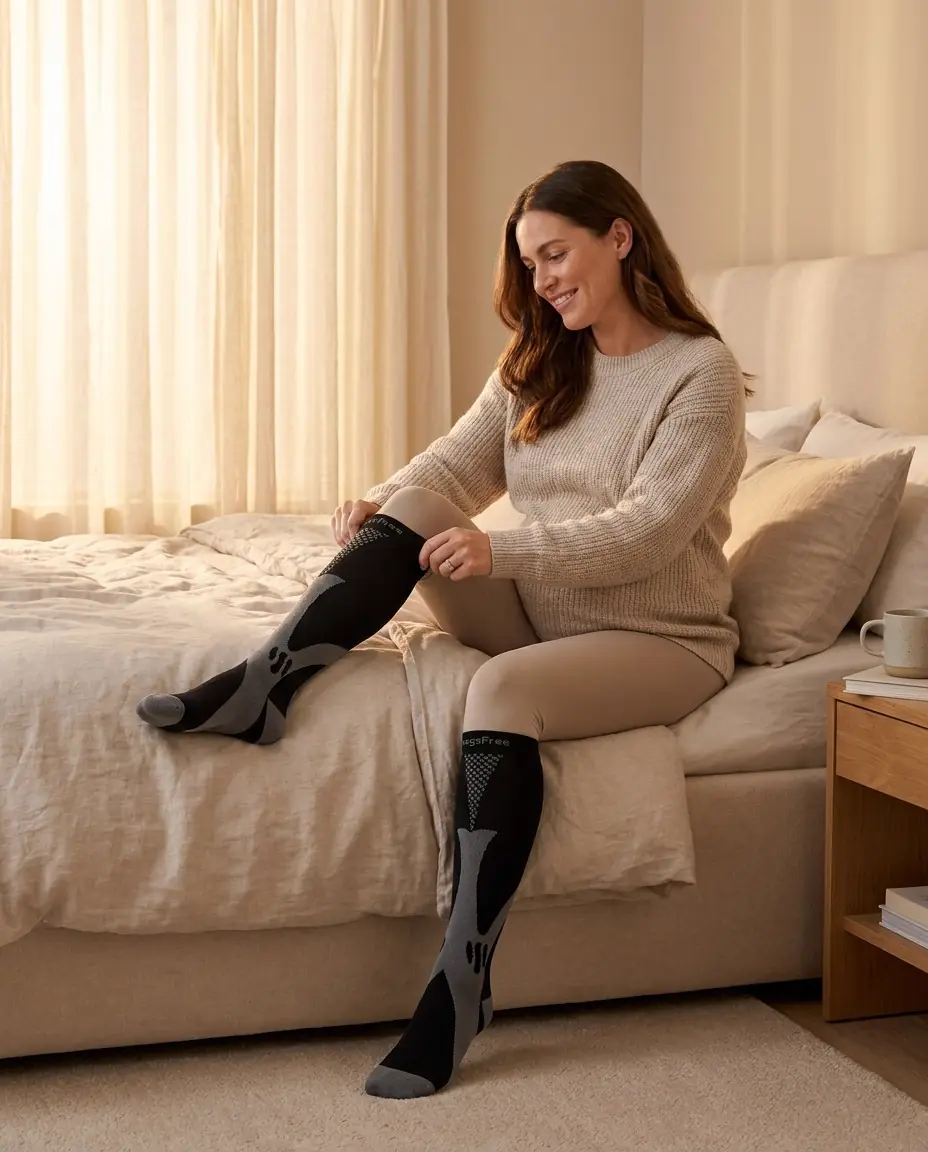
You wake up. You sit on the edge of the bed. You put the socks on before the day has had time to build swelling around the ankle.
Then you stand up and begin your normal routine.
The socks are already there while you make breakfast.
They are already there while you drive.
They are already there while you work, shop, sit through an appointment or walk around the house.
You are no longer trying to “catch up” at the end of the day.
You are supporting the lower legs through the hours that matter.
THE BILLION-DOLLAR BUSINESS OF “JUST GETTING THROUGH” PREGNANCY
Here’s something I didn’t fully appreciate until I watched Susan go through it.
Pregnancy comfort is an enormous industry. Maternity products are a multi-billion-dollar business, and a large part of it is built around one idea: helping you cope once you already feel uncomfortable.
Wider shoes for feet that have already swollen. Wedge pillows for legs that already ache. Foot spas, massage rollers and prenatal massages for the end of a long day.
But notice what they have in common: every one of them starts after the swelling has already built up. You pay to feel a little better at 8 p.m. about something that started at 8 a.m.
Nobody in that business has much reason to tell you that the simplest support happens before you’ve even left the bedroom.
It’s not a secret anyone is hiding. It’s just not where the money is.
So I’m telling you.
THE QUESTION I HEAR MOST: “AREN’T THESE JUST TIGHT SOCKS?”
No.
And this distinction is important.
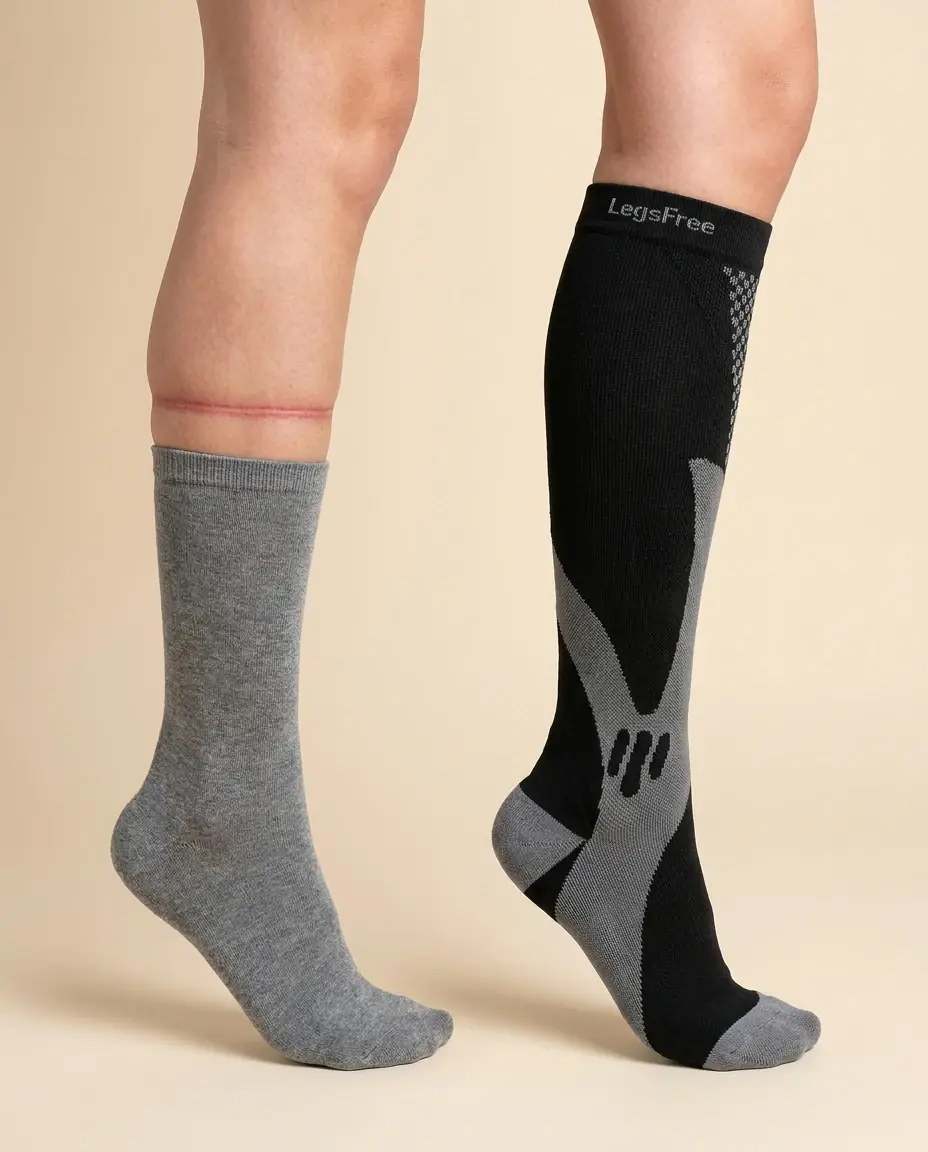
An ordinary tight sock may simply squeeze the leg wherever the elastic happens to be strongest.
That is why some socks leave a deep ring around the calf or ankle.
Graduated compression is intentionally designed around a pressure gradient.
With LegsFree, the stated compression range is 18–22 mmHg, with the strongest support around the ankle and progressively less pressure as the sock rises.
That is a very different design goal from “make the sock tight.”
INTRODUCING LEGSFREE SUPPORT SOCKS
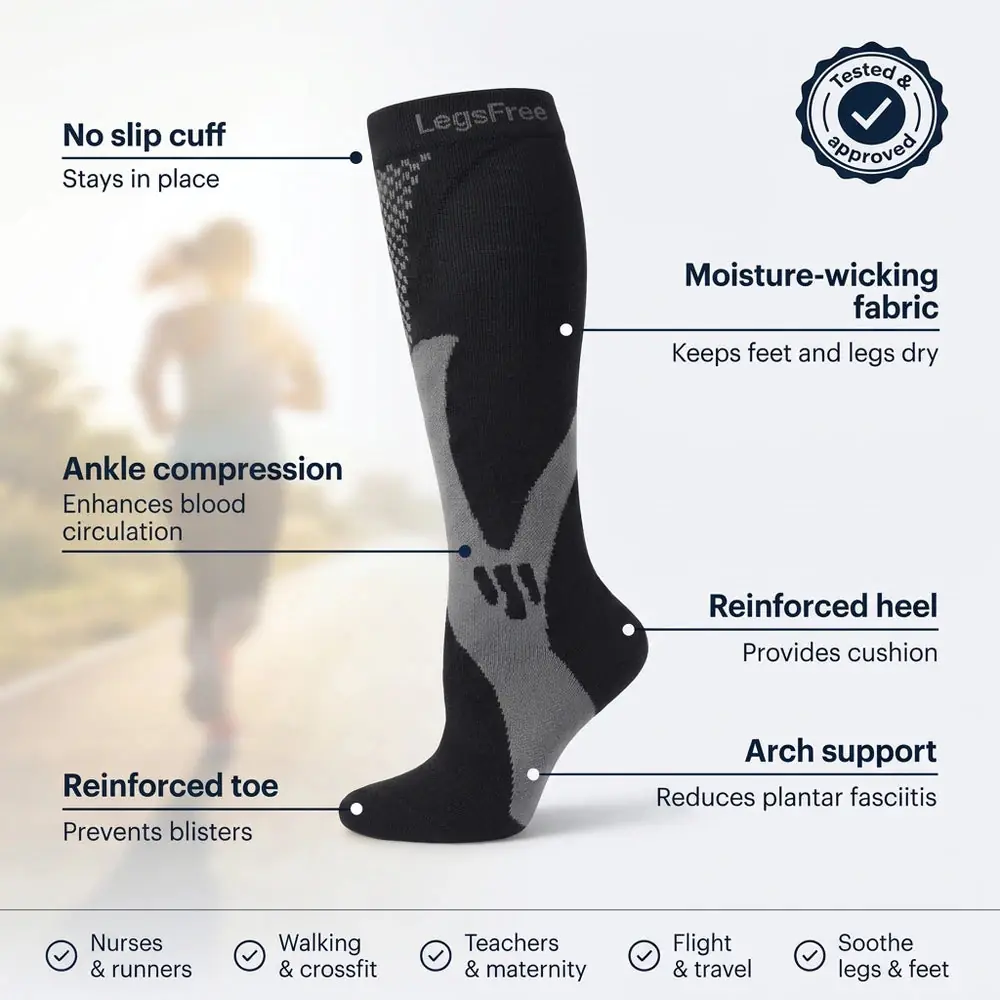
LegsFree is the version of this idea I wanted to see for everyday use.
Not a hospital-looking stocking.
Not something you only think about after your ankles are already swollen.
A support sock designed to become part of the morning routine.
The key features are straightforward:
- 18–22 mmHg graduated compression designed to be strongest around the ankle and lighter higher up.
- No-slip cuff intended to stay in place without constant adjustment.
- Breathable, moisture-wicking fabric for longer wear.
- Reinforced heel and toe for repeated use.
- Arch support built into the foot section.
- Multiple sizes so fit can be chosen rather than guessed.
What interests me most is not any one feature by itself.
It is the combination.
A pregnancy product has to survive real life.
It has to work while you are standing in the kitchen, sitting in traffic, walking through a shop, working at a desk and finally putting your feet up at night.
CHECK AVAILABILITY NOW »HERE’S EXACTLY HOW I WOULD USE THEM THROUGH A PREGNANCY DAY
Before getting fully dressed
Put them on in the morning while your legs are still relatively rested. For many women, this is easier than trying to pull compression socks over ankles that are already puffy later in the day.
During the morning
Wear them while you move through the normal routine — breakfast, work, errands, driving, school runs or appointments. You do not need to schedule a special “compression session.” The point is continuous support.
Through the afternoon
This is when many women begin noticing shoes getting tighter and sock marks getting deeper. The socks have already been in place for hours rather than being introduced after the swelling is obvious.
In the evening
Take them off when you are ready to relax. Elevating your feet and normal movement can still be part of the routine. Compression does not replace sensible pregnancy habits; it complements them.
THE RESULTS YOU CAN CHECK FOR YOURSELF
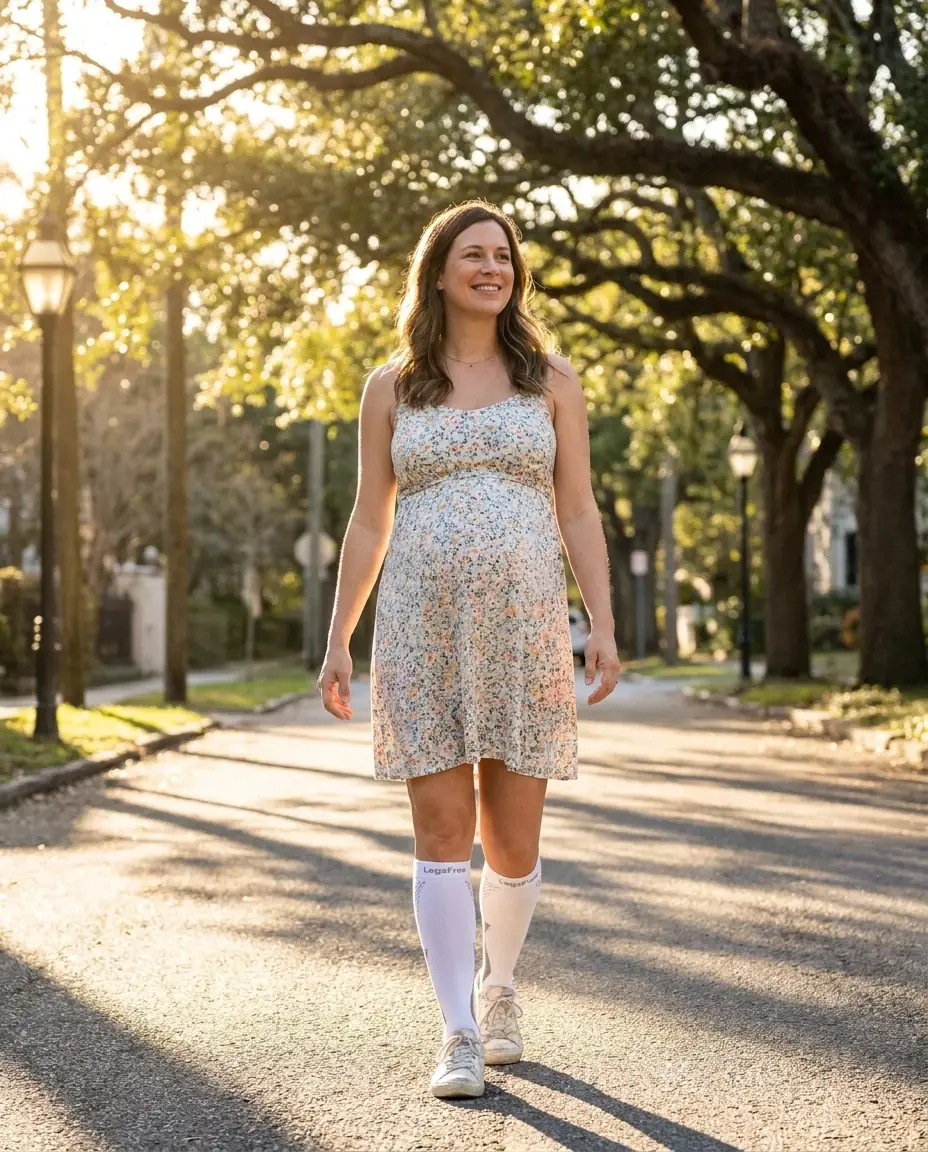
This is one of the few things you can test on yourself in a single day.
On a day you wear them, pay attention to four moments:
- At 3 p.m.: do your shoes still feel the way they did at breakfast?
- On the drive home: are the shoes staying on, or coming off the moment you sit in the car?
- When the socks come off: how deep is the line around your ankles compared with an ordinary day?
- In the evening: do your calves feel heavy and full, or like your own legs?
Compare that with the days you don’t wear them. That comparison is the only result that matters, and it’s yours to judge.
You’ll find what other women have said in the comments at the end of this article.
WHY SO MANY PREGNANCY “FIXES” MISS THE TIMING
Late pregnancy creates an entire category of workarounds.
They can make swollen feet more comfortable, but they do not address why the lower legs become puffy in the first place.
Useful for comfort, but it begins after the day has already happened.
Movement is valuable, but expecting a woman in her third trimester to keep walking all day is unrealistic.
Tightness without a known graduated pressure pattern is not the same as graduated compression.
This is why I prefer a simpler framework.
Do the helpful things you can still do — and support the legs continuously between them.
THE EXPENSIVE WAYS WE TRY TO MAKE THE THIRD TRIMESTER EASIER
Let me show you what “getting through it” can really cost.
A pair of wider or bigger shoes: commonly $60–$120. Often worn for a few weeks and then pushed to the back of the closet after the birth.
Extra visits and specialists outside your regular prenatal care: a prenatal physical therapist, a nutritionist to review your diet and salt intake, a private lymphatic-drainage or massage therapist, a podiatrist for aching feet. Commonly $75–$250 per session, and rarely just one. Worth it when you need them, but none of them is with you during the other 23 hours of the day.
Prenatal massage: commonly $80–$150 a session. Wonderful, but it happens after the day’s swelling has already built.
Leg-elevation pillows, foot spas and massage rollers: $30–$80 each, and more things to set up every evening.
The one nobody budgets for: the last weeks before the baby arrives spent on the couch with your feet up instead of doing the things you wanted to do before everything changes.
But before spending on ways to recover from the swelling, it makes sense to support your legs during the hours when it builds.
WHAT WOMEN USUALLY WANT TO KNOW BEFORE TRYING THEM
“Will they be too tight?”
Compression should feel supportive, not painfully constricting. Correct sizing matters.
“Can I wear them all day?”
They are designed for extended daytime wear, from breakfast until you settle in for the evening.
“Do I still need to move?”
Yes. Compression is not a substitute for normal movement. Walk and change position when practical.
“Do I put them on after my ankles swell?”
I prefer the opposite approach: put them on earlier in the day, before swelling has had hours to build.
THE PRICE THAT MAKES THIS AN EASY DAILY ROUTINE
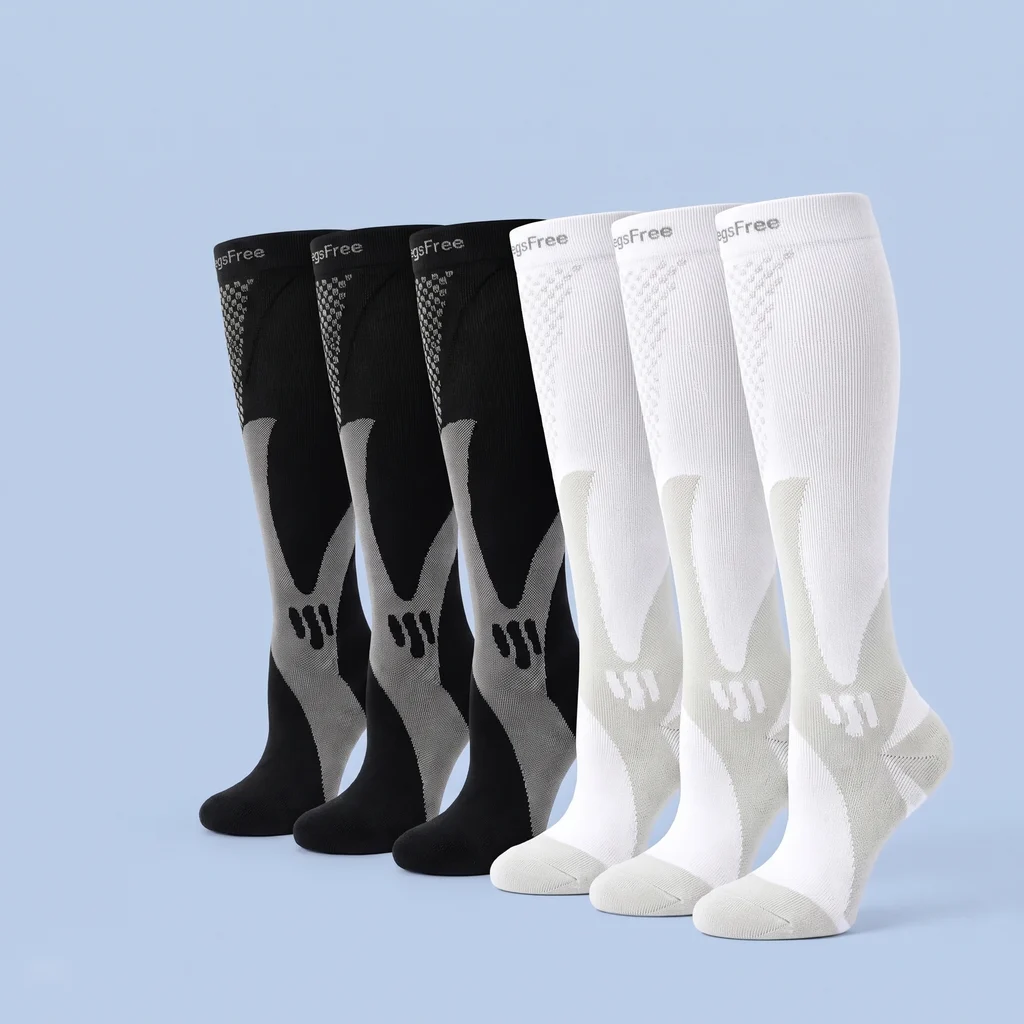
The current strongest bundle combines 67% OFF with BUY 2 + GET 4 FREE.
That gives you six pairs for $59.99 — about $10 per pair.
For pregnancy, I actually like the logic of having multiple pairs more than I do for occasional travel.
You may want a clean pair ready every morning.
You may be wearing them repeatedly through the week.
And when you are already tired, the last thing you need is a single pair that has to be washed and dried every night before you can use it again.
WHY IT’S 67% OFF RIGHT NOW
You might wonder why anyone would cut the price in half.
The honest answer: LegsFree is running its End of Summer Sale. The goal is simple: get as many moms-to-be as possible to try graduated compression through a real pregnancy day, instead of reading about it and forgetting.
A pair that has been on your legs from breakfast to dinner will convince you far more than anything I can write here.
So for now, the six-pair pack is $59.99. Less than a single prenatal massage. Less than a pair of maternity shoes you’ll stop wearing after the birth.
BUY 2 + GET 4 FREE + 67% OFF »BUT HERE’S THE CATCH
The BUY 2 + GET 4 FREE + 67% OFF combination is a promotional bundle.
If the six-pair option is still displayed when you click through, the offer is currently available.
LegsFree is sold through LegsFree.com. Check the official product page for the live bundle, current sizing and return terms.
MY PERSONAL 90-DAY PREGNANCY PROMISE
Don’t judge support socks by wearing them for five minutes in the bedroom.
Use them in the situation that matters.
Put them on in the morning.
Go through a normal day.
Work, sit, stand, walk, run errands and rest as you normally would.
Then compare how your ankles, shoes and lower legs feel in the late afternoon with the days when you did not wear them.
LegsFree currently provides a 90-day guarantee under its return policy.
That gives you a practical window to decide whether they deserve a place in the rest of your pregnancy routine.
THE DECISION FOR THE REST OF YOUR THIRD TRIMESTER
You have two straightforward options.
Option #1: Keep reacting at the end of the day.
Wait until your shoes feel tight. Wait until the sock marks are deep. Put your feet up. Change shoes. Hope tomorrow is easier.
Option #2: Support your lower legs from the beginning of the day.
Put on graduated compression in the morning and let it work quietly through the hours when gravity and pregnancy are putting the greatest demand on the lower legs.
That is the approach I would rather women understand before assuming the evening discomfort is simply something they have to tolerate.
HERE’S EXACTLY WHAT TO DO NEXT
If you want to try this approach:
- Check the current LegsFree offer. Confirm that BUY 2 + GET 4 FREE + 67% OFF is still displayed.
- Use the sizing information. Compression depends on fit. Do not deliberately buy an undersized pair because you think “tighter is better.”
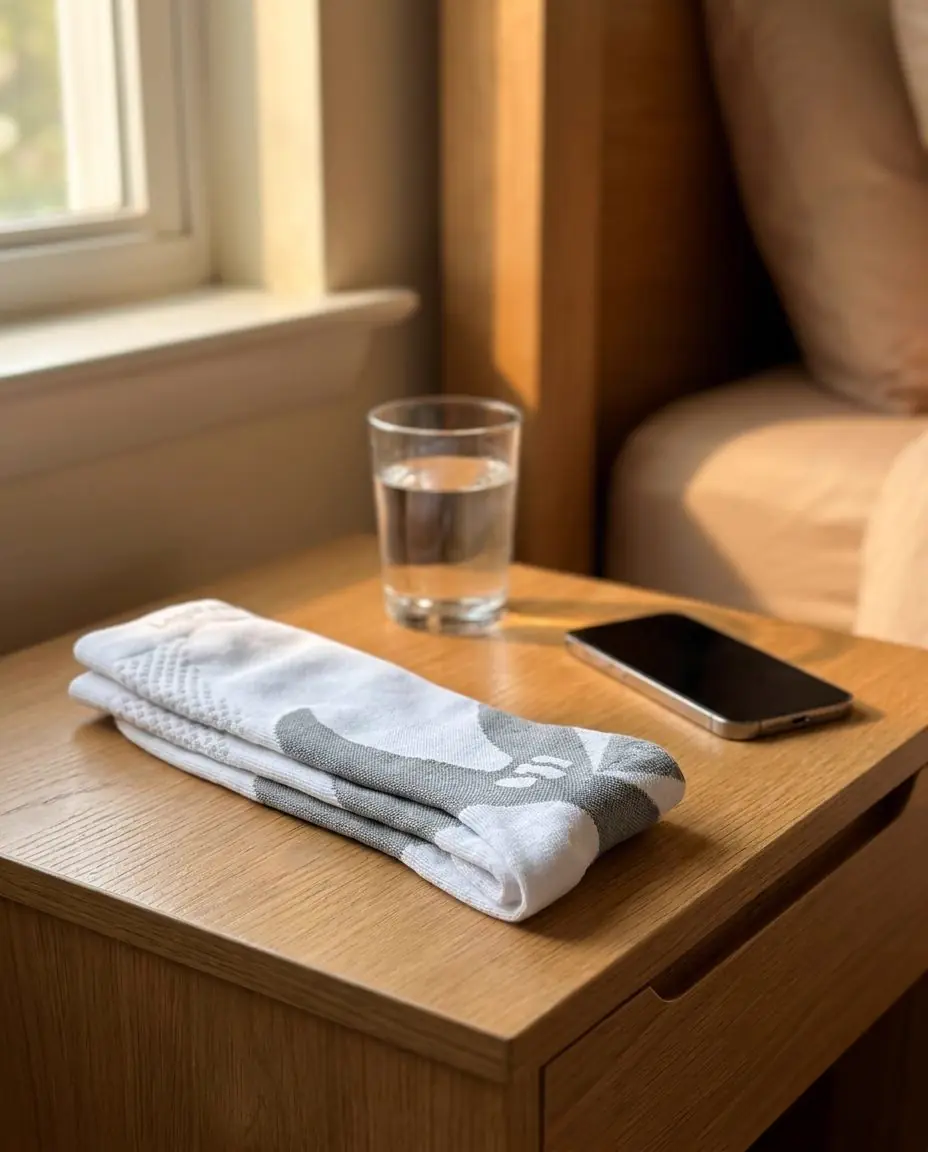
- Put them on in the morning. This is usually easier before the ankles become puffy.
- Wear them through your normal daytime routine. Continue moving and changing position when practical.
Pregnancy asks a lot from your body.
Supporting your legs does not need to become another complicated task.
CHECK AVAILABILITY NOW »To lighter, more comfortable legs through the rest of your pregnancy,
Dr. Harold Whitaker
OB/GYN
32 Years of Clinical Experience
P.S. If you want to use compression during pregnancy, the simplest habit is to put it on before the day gets going. Waiting until the ankles are already swollen makes the routine harder.
P.P.S. The strongest current LegsFree bundle is BUY 2 + GET 4 FREE + 67% OFF. Six pairs means you can rotate a clean pair through the week instead of depending on one or two pairs.
P.P.P.S. I’m serious: the BUY 2 + GET 4 FREE + 67% OFF deal is a promotion, not the everyday price. When it ends, the 6-pair pack goes back to full price, and I don’t control when that happens. So if you click through and still see the 6-pack at $59.99, grab it. If it’s gone, it’s gone. Don’t say I didn’t warn you. (LegsFree uses true graduated compression at 18–22 mmHg, and yes, we made sure it’s properly graduated, not just “tight.” It’s only sold at LegsFree.com, not on Amazon or eBay.)
90-Day Guarantee
Secure Checkout
Morning Routine
Free Shipping Offer
BUY 2 + GET 4 FREE + 67% OFF
Check the current offer and sizing on the official LegsFree product page.
GET THE LEGSFREE OFFER NOW »MEDICAL & HEALTH DISCLAIMER: This page provides general information and is not a substitute for individual prenatal or medical care. LegsFree Support Socks are not intended to diagnose, treat, cure or prevent disease. Ask your obstetrician, midwife or other healthcare professional if compression is appropriate for you, particularly if you have vascular disease, diabetes-related circulation problems, skin infection or another medical condition. Sudden swelling, swelling that is much worse in one leg, pain, warmth or redness, severe headache, visual changes, chest pain or difficulty breathing requires prompt medical assessment. This article is an advertorial: a LegsFree publication.
Comments